The Anglo-Norman Invasion of Ireland: The First Norman Lord of Meath
There was a storm gathering on the horizon over the Irish Sea in October of 1171. This was not a storm of rain or thunder. No, this tempest was far more terrifying.
With his fleet of four hundred ships, heavily laden with five hundred men-at-arms, four thousand archers, and equipment capable of unleashing devastating war, King Henry II journeyed to Ireland, determined to eliminate a threat he had allowed to fester right under his nose. But the King of England is merely a supporting player in our story today, a background figure in a production that will transform the very fabric of Irish society for centuries to come.
For, amidst the siege towers, the pre-constructed fortifications, among the armoured knights, horses, and enough provisions to sustain an army for months, stood a single man whom the King chose deliberately for his brutal frontier military acumen. Plucked from the Welsh Marches, this man would later become the first true Norman Lord of Ireland. And just as a severe burn had left the right side of his face marred and disfigured, his legacy would also leave its scar on the history of the land he was about to claim.
This man’s name was Hugh de Lacy.
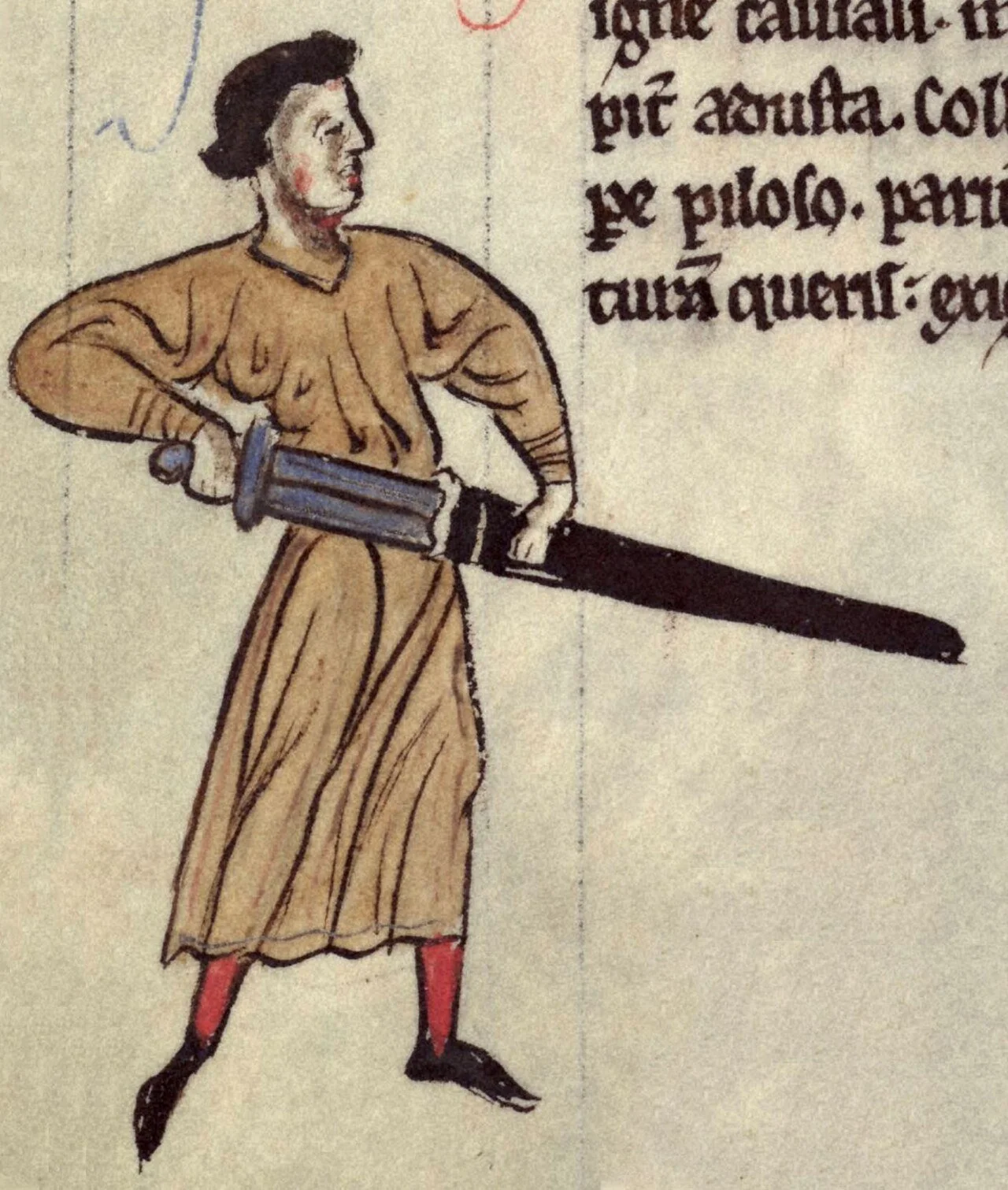
Impression of Hugh de Lacy from the Expugnatio Hibernica
But before we explore his influence on the island in depth, let us first examine who de Lacy was: his origins, his unlikely rise to power, and the qualities and skills that made him the ideal candidate to play the central role in King Henry II’s schemes.
Born into the Norman aristocracy in Herefordshire in the early 1130s, Hugh de Lacy was the second son of Gilbert and Agnes de Lacy. Having taken part in a failed rebellion against the King, the de Lacys were forced to surrender their English estates, and so the young Hugh spent much of his childhood in Normandy while his father campaigned to win them back. Although Gilbert’s efforts were ultimately successful, Hugh stood to gain little from them — after all, he was the second son, and thus second in line behind his brother Robert for his family’s inheritance. What was a man like Hugh de Lacy to do, then, but carve a legacy for himself?
As a Welsh Marcher Lord, De Lacy built his reputation in frontier warfare under his father during the Royal military campaigns along the borders of Herefordshire and Shropshire. It was during these campaigns that de Lacy’s battlefield acumen — honed specifically for the guerrilla-style warfare of the Welsh Marches — caught the King's eye. This, no doubt, put him at the top of Henry’s mind when he found himself in need of such talents. However, apart from his apparent royal favour, it’s fair to say that Hugh de Lacy was not a popular man.
Gerald of Wales — a near-contemporary and author of Expugnatio Hibernica (the Conquest of Ireland) — depicted de Lacy as a short, hairy, and misshapen man, with “dark sunken eyes and flattened nostrils”. He regarded him as avaricious and more ambitious than what was deemed appropriate for the era. This reputation is clearly reflected in more formal sources — records show that the Marcher Lord received multiple royal fines for offences against the crown, including illegally clearing the King’s forest and encroaching on public land. Further evidence of his anti-social attitude can be found in the chronicles of his strenuous quarrel with the bishop of Hereford, between 1166 and 1177, to whom de Lacy owed a debt of military service which he, of course, refused to pay. Although the dispute did not break in de Lacy’s favour, these facts paint a clear picture of a stubborn, wilful, and unyielding man.
But let us not get ahead of ourselves. In the decades prior, de Lacy experienced a series of life-changing events, beginning in the late 1150s, when his father Gilbert departed to join the Knights Templar and crusade across the Middle East. As was customary, the senior de Lacy bequeathed his lands and titles to his eldest son, Robert. No surprises there, of course. What did come as a surprise, however, was what happened next: in 1162, just a few short years after ascending to the highest position in his family, Robert de Lacy died — and, crucially, without an heir. Having long resigned himself to his role as second son — and bearing the chip on his shoulder that came with it — Hugh de Lacy now found himself in the strangest of positions. He was at once fatherless and brotherless, but within just a handful of years, his fortunes had shifted from those of a man desperate to prove his own worth to those of someone whose title was all the evidence he needed: the fifth Baron of the de Lacy family.
But de Lacy’s rapid rise to baronage in the Welsh Marches begs some questions. What business did he have in Ireland? What danger had grown so threatening across the Irish Sea that the King of England decided to remove one of his most trusted advisers from his home to put an end to it? To find our answer, let us briefly recap where we left off in our previous entry in this series on the Anglo-Norman Conquest of Ireland.
In his thirst for vengeance and the recovery of his lost title, the erstwhile King of Leinster and adept agitator Diarmait Mac Murchada looked eastwards. It was here that he sought help from the Anglo-Norman lords who had conquered that land a century prior. Though his pleas fell on many a deaf ear at first, Richard de Clare — better known as Strongbow — eventually answered his call. Their combined forces swiftly defeated Mac Murchada’s enemies, and soon he found himself back on his throne. As compensation, the betrayer King of Ireland had promised Strongbow not only the Lordship of Dublin but also his daughter’s hand in marriage. When Mac Murchada died in 1171, the second Earl of Pembroke wasted no time claiming his father-in-law's title.
In the eyes of the English Crown, Strongbow’s kingship of Leinster made him a “Lordless man,” a master of a vast territory outside royal jurisdiction — one that just happened to be right on England’s doorstep. A shrewd political operator, one can only imagine the panicked thoughts that ran through King Henry’s mind as he contemplated the events that might follow should he allow this Welsh upstart to proceed unchecked.
Henry knew exactly what this prickly Irish problem called for: someone loyal, trusted, and stationable in Ireland as a counterweight to Strongbow’s perceived ambitions. That person was Hugh de Lacy. Consequently, in late October 1171, King Henry II and his formidable army landed at Crook, just outside modern Waterford. Strongbow was quick to submit to his king, laying all of his Irish conquests at Henry’s feet. No doubt pleasantly surprised, Henry allowed Strongbow to keep his Lordship of Leinster — subject to his vassalage, of course, plus the guaranteed service of one hundred of the Lord’s men. Furthermore, the King declared Dublin, Waterford, and Wexford royal demesnes, bringing these vital trading hubs under direct monarchical control. This was surely a small price to pay for the Welsh Lord, who had spent much of his adult life sulking in his humble keep in Strigoil.
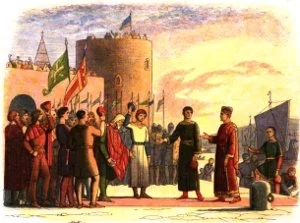
King Henry II’s Arrival in Waterford
But de Lacy was an entirely different story. Determined to prevent Strongbow’s holdings from expanding, the King issued a royal charter in April 1172, granting de Lacy the entirety of the 800,000-acre territory of Meath. This speculative grant would fully encircle Strongbow’s and secure the stability Henry desperately sought. It also gave de Lacy almost regal authority over a vast area of the island. He had the right to raise his own forces, administer his own justice, and even build castles unbound by royal restrictions. This, in particular, was a freedom denied even to the Lords of England. As further proof of the King’s trust, Henry appointed de Lacy as the Baron of Dublin and tasked him with administering his new demesne.
But as with all things in life, there was a catch. Before de Lacy could exert his authority over his new domain, he had a task to complete: he had to conquer it. So it was that the King’s speculative grant set de Lacy on a direct collision course with the King of Breifne, the ruler of Meath, and arch-enemy of the late, not-so-great Diarmait Mac Murchada: Tigernán Ua Ruairc.
But before we move on to the thrilling events that occurred at the Hill of Ward, one can’t help but wonder how Strongbow regarded the accolades and titles now heaped upon his contemporary. Surprisingly enough, the sources describe the relationship between the two men as “harmonious”. Their political rivalry, though stoked by their Lord, was only natural given their shared pedigree. Furthermore, de Lacy’s first wife, Rohese de Monmouth, was Strongbow’s first cousin, making the two men related through marriage. As such, the two leaders worked well together until Strongbow’s death in 1176, sharing tenants-in-chief across their territories, and with Strongbow even taking up arms in defence of Meath during de Lacy’s occasional absences. To put the cherry on top of this unlikely alliance, Strongbow stood as the primary witness to the very charter that granted de Lacy his territories. Perhaps Strongbow was genuinely pleased by his lawful relative's success and was only too happy to bask in his glow. Or perhaps — and in my opinion, more likely — he simply knew which side his bread was buttered on, and made his judgments accordingly.
And so we come to the events at the Hill of Ward. In the summer of 1172, de Lacy sent his envoys to Ua Ruairc, intent on arranging a parley to define their respective areas of control. The King of Breifne agreed, and both parties chose the fabled hill as their meeting place. But there was little trust between the two men, and so the conference began at a distance. Outriders rode back and forth, carrying with them the words of their respective leaders. With a tentative sense of ease beginning to build, it wasn’t long before Ua Ruairc and de Lacy came face to face.
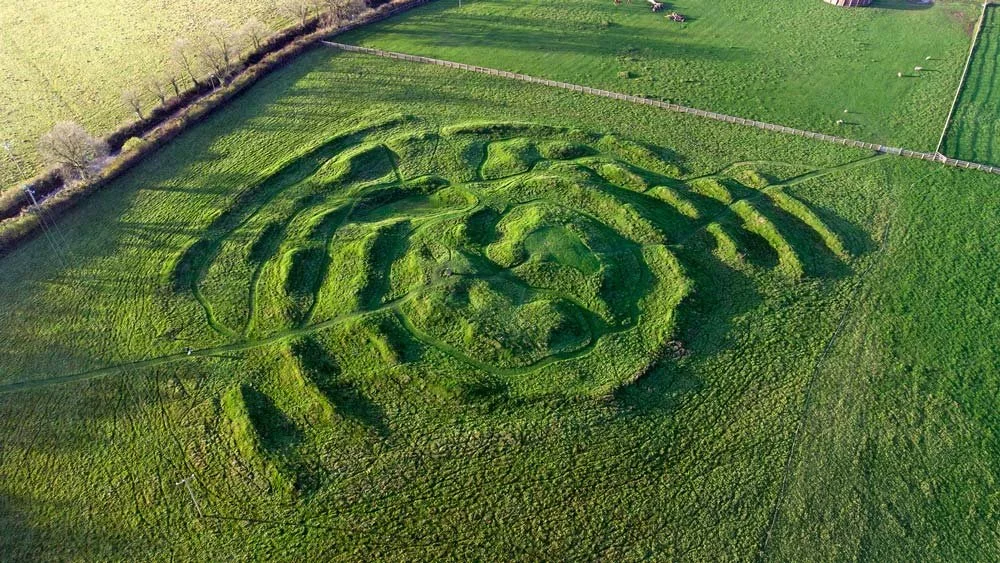
The Hill of Ward
But bloodshed, it seems, was already top of mind for the Norman contingent. Whispers of feverish dreams of wild boars tearing apart both Ua Ruairc and de Lacy spread through their ranks like wildfire. Regardless of the instigating side, it wasn’t long before the parley broke down into an outright skirmish. The telling of the events varies wildly across the sources — the offending party largely dictated by the author's heritage — but they all agree on two things. One: de Lacy himself almost lost his life to a narrowly dodged axe strike, one which instead found its mark in his interpreter. And two: Tiergnan Ua Ruairc was not so fortunate. While attempting to execute his escape, Griffin Fitzgerald — the very same man plagued by visions of boarish evisceration — ran him through with his spear. It’s worth noting that some Irish sources claim the parley was a stitch-up from the start, and even go so far as to accuse Ua Ruairc’s rival tribesman of collaboration with de Lacy. Given the nature of twelfth-century Irish politics, this does not strike me as particularly improbable.
We will never truly know what transpired on that hill. What we do know, however, is that de Lacy’s path to conquest was now wide open before him. If he were to succeed, he would need to grab the proverbial bull by its horns — a task he was assuredly most capable of. Intent on sending a message to any and all petty Irish kings who might fancy their luck, de Lacy executed a series of bloodthirsty displays that are monstrous by our modern lights. He had Ua Ruairc’s head removed from its body and mounted atop the gates of Dublin city. He ordered the body gibbeted on the northern side of the city for all to see. Shortly thereafter, he sent Ua Ruairc’s head eastward to King Henry II, where it no doubt brought a wry smile to his face. A sorry end to the life of one of medieval Ireland’s most eminent figures.
Though the sources remember Ua Ruairc as a feared and formidable warlord, quick to anger, slow to forgive, and dogged in his pursuit of vengeance, his death is significant as it marked the next step in the ongoing downfall of the incumbent Irish aristocracy. The use of his body in the days and weeks after the events at the Hill of Ward made one thing abundantly clear: the new undisputed lord of Meath, Hugh de Lacy, would brook no dissension and was no man to be trifled with.
De Lacy went about consolidating his power in Meath the same way any good Norman would: castle-building. He established his caput — his headquarters — at Trim, initially constructing a wooden defensive fortification there. The structure that would eventually become Trim Castle underwent many changes over the years, including one that saw its complete destruction by fire at the hands of the Ardrí in 1174. Ultimately, however, de Lacy’s famed HQ would go on to become not only the first stone castle in Ireland, but the largest. The Norman lord imported some of the finest master masons from England and France to design and build it, and conscripted local labourers to mine the limestone used in its construction — a mine that still exists beneath the ruins of the castle to this day. Upon its eventual completion — long after de Lacy’s death, mind you — Trim Castle would have shone like an intimidating, white beacon against the lush Irish fields, reminding all who laid eyes upon it who held the real power in the region.
Concurrently, de Lacy began a process of subinfeudation, in which he divided his territories into baronies, granting them to his most loyal knights to ensure their proper defence (and, of course, their exploitation). Santry went to a knight by the name of Adam de Faipo. The Castleknock area went to Hugh Tyrell. Of course, de Lacy was careful to keep the best, most profitable lands — including Kells, Duleek, and Clondard — for himself, creating a series of powerful anchoring points from which he would bolster his regional power. In short, de Lacy introduced the feudal order to Ireland. For better or worse, this entire process remains one of the lasting marks he left on the country — many of the territorial boundaries he established are still easily visible on modern maps.
And although our modern sensibilities will flare with disgust at even the mention of the word “feudalism”, it is worth noting that prior to the arrival of the Normans, much of the island’s hard labour was carried out by indentured slaves. Stolen from the coasts of nearby territories and traded like cattle at market, these poor souls were forced to endure hours and hours of backbreaking farm labour, and had little choice but to make do with whatever scraps their masters — mainly small, landed farmers — would deign to grant them. De Lacy and his Norman forces overturned this entire system, dragging both farmers and slaves alike into serfdom under their new Barons. Undoubtedly, these former slaves would have regarded serfdom as a step up.
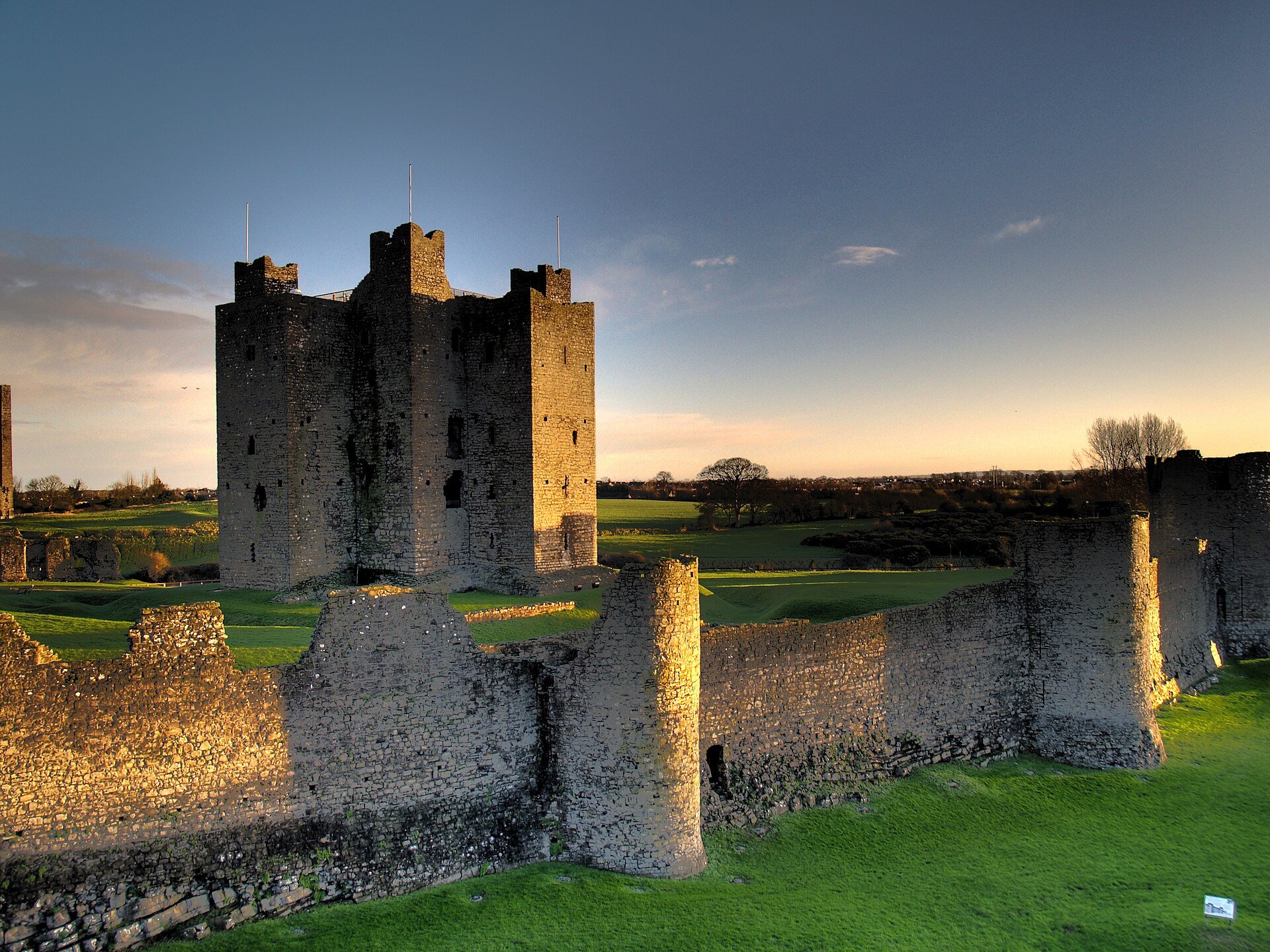
Trim Castle
But as previously alluded to, de Lacy’s initial stay in Ireland was a short one. Before the end of 1172, with his Marcher estates under constant threat from the defiant Welsh, he travelled eastwards to attend to them. Then, in 1173, when one of the King’s own sons started a rebellion in Normandy, de Lacy was summoned there to assist in its suppression. It would be four long years before de Lacy would return to the lands he had so ruthlessly transformed, then just as quickly departed from. And in the interim, the very man to whom de Lacy had entrusted its stewardship would shuffle from this mortal coil. In 1176, Richard de Clare, the man known as Strongbow, died.
Although merely tangential to the current chapter of this tale, it would be remiss to forgo the nitty-gritty of the death of a man who had such a powerful and lasting impact on the history of Ireland. Sources differ on the exact date of his demise, but most modern historians place it between April and June of that year. What is most interesting, however, is the nature of his death. He wasn’t cut down in the heat of battle. He wasn’t caught in the neck by a bolt finding its mark. He didn’t even fall from his horse, trampled underfoot like so much earth. No, Richard de Clare, Norman Lord, died of a foot infection. The prevailing consensus is that a long-standing (forgive the pun) ulcer turned gangrenous and, eventually, septic. Unsurprisingly, the Irish annals record this event as divine retribution and even ascribe his death to the hands of St Bridget. Regardless of whether Strongbow was struck down from on high or merely fell victim to an ailment which he would no doubt survive today, one thing was clear: there was now a single, uncontested Norman power in Ireland. This fact was confirmed at the Council of Oxford in the summer of 1177 as he travelled back from his campaigns, and a short time later, Hugh de Lacy made his return.
In one fell swoop, de Lacy’s power had vastly expanded. He added Dublin to his repertoire of territories, granted to him by the King to rule over as he saw fit. And with Strongbow’s sole heir a minor, a third of Leinster, too, fell under his sway — a considerable boon, indeed. The sharp-witted will undoubtedly notice a recurring pattern here: Norman lords gaining enough power in Ireland to perhaps someday threaten the crown. King Henry, too, was wide of this fact, and so he required de Lacy to surrender his castle at Ludlow as a form of hostage in exchange for these grants. I’m sure the Norman lord saw it as a fair compromise.
Upon his return, however, de Lacy discovered that the fruits of his situation were not nearly as sweet as had been promised in the early days of summer. When he at last arrived, he found himself in a land utterly devastated, ravaged by years of war and raiding. Constant sorties by Irish kings against his lordship in Meath had left his territory in disrepair. Moreover, many of the native Gaels had fled to safer pastures, leaving him bereft of the labour required to tend the land. The result was a chronic food shortage, only further exacerbated by extreme weather conditions. This included a drought so severe that it lowered the mighty River Shannon to a level described in the annals as “dangerous”. In true Irish style, this parched period was followed by a severe winter of storms and frost, leaving the farmland desolate and unworked.
But our subject was a man of resolve and would not let such trifling matters hinder his industry. First, he set about rebuilding his caput at Trim, and even ordered the expansion of its fortifications. Furthermore, he constructed a network of stone and earthwork castles across his territories, ensuring they could be subdued and controlled. He continued his process of subinfeudation, dividing up his new lands among his most loyal knights. Most importantly, however, de Lacy adopted a policy of reconciliation with the native Gaels. Recognising that the land would continue to go untilled without their labour, he persuaded them to return with promises to restore their former holdings, and he even began to govern with a much milder hand than in years prior.
And so, by 1179, after years of disastrous mismanagement, life on the island of Ireland must have felt like a long-awaited return to normalcy. But as is typical with Irish affairs throughout the second millennium, this feeling was merely a calm before the storm, as some of the most tumultuous years were still to come.
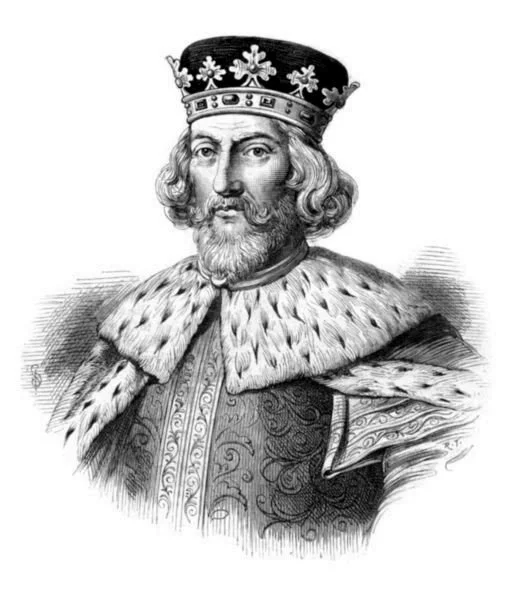
John - Illustration from Cassell's History of England
In an effort to further secure his hold over the western regions of his Meath territory, de Lacy formed an alliance with the formerly belligerent Ardí Ruarí Ua Choncobair. To solidify this alliance, he married his daughter. This act completely reshaped the Irish political landscape, bringing the Normans and the Gaels even closer together. It also served to add more fuel to the fire already raging in England: rumours depicting an ambitious man who intended to throw off his loyalty to the Crown and claim sovereignty over Ireland. To make matters worse, de Lacy entered into this pact without seeking King Henry’s permission. The King, for his part, now found himself in much the same position he had been in ten years earlier, when he peered across the Irish Sea with a fear that Strongbow was getting too big for his boots. He looked now upon the man he had hand-picked to supplant him with the very same suspicious eyes.
But instead of taking decisive action, as he had done a decade earlier, the King of England vacillated. Over the next three years, De Lacy’s standing in Ireland underwent a whirlwind of recalls and restorations. First, the King sent two trusted men to replace him — John de Lacy and Richard de Pelc. It soon became apparent, however, that our subject’s experience on the Irish frontier was indispensable to the Crown, and de Lacy was restored as Chief Governor the following year, albeit under the watchful eye of Robert of Shrewsbury. Then, in 1184, the King sent Philip of Worcester to whip de Lacy into obedience. He made his final decision later that year, when he declared that his son, Prince John, would sit as the Lord of Ireland.
Throughout all of this back-and-forth, de Lacy remained one of the most powerful men in the country. This was not only due to the alliances he had managed to forge, but also because of what can only be described as sheer force of will. He thwarted his replacements at every turn, most notably by continuing his programme of castle-building despite the strategic encirclement of his territories by men loyal to Prince John. Such was de Lacy’s continuing stature that his name appears as the first witness to John’s charter to Dublin, beside which he styles himself as Constable, no doubt to establish his precedence and authority over the young prince.
Although de Lacy was nothing if not a thorn in John’s side, the prince still had an island to conquer. Not that John needed any such enemies to hinder him — he had that covered himself. Recognising that John bore the weight of the entire English Crown behind him, Irish kings quickly saw the need to pay him homage. The prince and his friends greeted them with insults, even going so far as to playfully tug on their long, traditional beards. It was a political disaster. News of the offences spread, and soon enough, a new league of resistance against the English was formed.
The subsequent military expedition was equally disastrous. John faced defeat after defeat at the hands of the Gaelic forces and, true to form, was accused of hoarding money instead of paying his soldiers. This led to widespread desertion. By December 1185 — just eight months after arriving on the island — Prince John had abandoned the place and retreated to the safety of England. Though the conquest was a complete failure, it must be noted that John’s overall expedition left a lasting impact on Ireland. Many of the men he installed as part of his strategy to control de Lacy went on to dominate Irish politics for centuries.
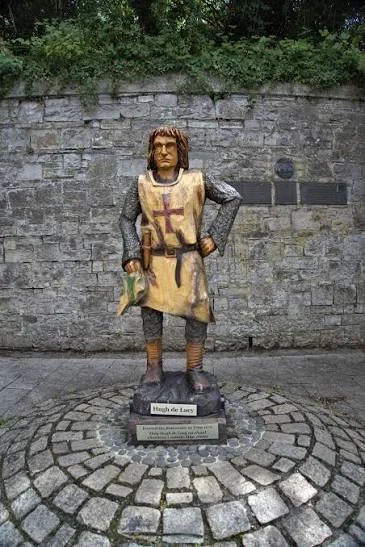
Statue of Hugh de Lacy at Trim Castle
And what was de Lacy up to while the prince made a feckless attempt at conquest? Why, he bided his time. He attended to his administrative duties. He kept his lords in line and caused trouble for John and his men whenever and however he could. Although his formal position remained the same, de Lacy undoubtedly saw the prince’s retreat as an opportunity ripe for the plucking.
Alas, history is seldom so kind as to respect the best-laid plans of such men. While overseeing the construction of a motte-and-bailey castle at Durrow, de Lacy noticed something he simply couldn’t abide: a Gaelic labourer using his pickaxe in a manner that struck him as ill-trained. Bending down to take the tool from the foolish Gael and show him the correct manner of swinging, de Lacy failed to notice an approaching Irishman named Gilla-gan-inathar Ua Miadhaigh. Concealed within Ua Miadhaigh’s cloak was an axe. Swiftly, he brought it down on the back of de Lacy’s head, severing it from his body, and thus ending the life of the Norman Lord. The entire plan, orchestrated by local Irish Lords, was an effort to stop the crown’s ongoing westward expansion. Hugh de Lacy was assassinated in July of 1186. King Henry was said to have openly rejoiced at the death of his most powerful and suspicious subject. He ordered Prince John to return to Ireland and immediately take possession of de Lacy’s lands. Full royal control over them was established by August of that year.
And so passes the second great Anglo-Norman lord of the conquest of Ireland. All told, it’s difficult not to view Hugh de Lacy through a lens of brutality, avarice, and duplicity. This lens is informed not just by his cruelty towards the indigenous Gaels of our period (until, of course, he needed them), nor solely by his relentless expansion across the island in pursuit of power, but by his behaviour towards the very man who raised him up onto the pedestal from which he later fell. It must be said that this amateur historian is far from a royal sympathiser, but even I can admit freely that, through his actions, de Lacy demonstrated an obvious desire to advance his own ambitions at the expense of the man he claimed to serve. At least Strongbow was sensible enough to relinquish his captured lands and bend the knee when the time came. No doubt the young Prince was telling the truth when he told his father that de Lacy had his eye on an Irish Kingship. One can’t help but wonder what shape the island of Ireland might have taken if that had been allowed to transpire.
Nonetheless, we cannot conclude without acknowledging the profound impact Hugh de Lacy had on the Gaelic homeland. To the people of Ireland, he was not only a harbinger of death and destruction but also a forerunner of urban life. The division of his conquered lands into baronies and manors led Ireland to adopt the same system of governance as England and, consequently, the rest of Europe. This process of subinfeudation also gave rise to many of today's principal population centres in the middle of the country — towns and cities such as Drogheda, Trim, Kells, Navan, and Athboy all owe their modern county lines and parish boundaries to the work of Hugh de Lacy.
This might seem like a minor thing now, having lived in the resulting world for as long as we have. But consider, I beg you, the possibility of what might have been if these painful evolutions had not been forced. It’s likely that medieval Ireland — with its feuding kings, grudges so deep they touch bone, and bustling slave trade — would have found its way to modernity regardless. Or maybe we’d still be gouging out the eyes of our enemies so that they might no longer threaten us, killing their family members and stealing their wives.
One thing is certain: as enduring as Hugh de Lacy’s influence was on Ireland’s land and society, his actions were but a single link in a chain of events taking place over the course of centuries that brought about immense suffering and the loss of a rich and vibrant culture, violence and bloodshed notwithstanding.