The Commonplace Book
I am an avid reader. I typically have two books on the go at any time, as I weave my way through the rich tapestry of fiction and non-fiction, history and philosophy, sci-fi and horror, self-improvement and memoir. Whatever piques my interest, I find a book about it, and I read it.
Recently, however, while enjoying Wisdom Takes Work by Ryan Holiday, I discovered an approach to my reading that has recast me from a simple peruser of texts into something altogether more sinister: a burglar, a thief in the night, one intent on stealing all that is gold that he can lay his hands on, hoarding it for his own selfish gain. This dark and menacing process? The Commonplace Book.
Perhaps my description of this transformation is a touch dramatic. I’m sorry to say that you won’t come upon me breaking into people’s houses at night, nor will you catch me cracking any safes. Instead, you’ll find me scribbling down the thoughts and ideas I read about, the beautiful lines penned by authors both ancient and modern, the fresh, unconsidered stances that shift my perspective on the world. The quotes, the commentaries, the witty reparté — if it catches my attention, I have, of late, been transcribing from book to paper through the prowess of the pen. Let me tell you why.
This exercise seems like a simple thing, really, and perhaps I’m late to the game. For the longest time, I would simply bounce from topic to topic, consuming the wealth of information the written word offers, telling myself that, yes, now I can claim I’ve finally learned about the fall of the Roman Republic, or the Battle of Dublin, or how Technofeudalism has enslaved us all. Needless to say, like water leaking from an ill-fitting pipe (an apt description of my brain), most, if not all, of these subjects' important details have simply slipped from my grasp.
In the short thirty or so days since I began my Commonplace Book — one I’ve taken to calling Fragments, a title shamelessly borrowed from the works of Arian, the stenographer of our good friend Epictetus — my retention of these salient details has, in a word, skyrocketed. I find the quotes I’ve looted popping into my head out of nowhere, as if desperate for my continued attention and a permanent place at the forefront of my mind. To illustrate: I try to limit my alcohol consumption to special occasions as much as possible, the kind of events I have found myself abundant with in recent months. And wouldn’t you know it, just yesterday, while looking forward to a quiet evening in and a fresh Sunday morning, I heard that little nagging voice in the back of my mind: “A drink would go down pretty well right now, wouldn’t it?”
I won’t lie — I was sorely tempted to indulge. But, as if by magic, Seneca himself sprang into my mind with his wise words concerning Alexander the Great. I’ll paraphrase on his behalf: Alexander survived over a decade of military campaigns in strange lands, braving alien mountains, rivers, and seas; the harshest of terrains and the worst weather. He survived it all. In the end, it was the drink that did him in. Now, I’m no Alexander the Great — nor is that a comparison I would wish to invite — but Seneca’s musings (and my recording of them) did help me stick with my decision to have a quiet night. I was very happy about it this morning.
So, I’m already noticing the benefits of exercising this particular muscle. The eagle-eyed among those who might be reading this will spot another subtle flex hidden within the passage above: I have not quoted Seneca directly, but rather have rephrased and reframed his words, helping them to settle more deeply into my modern Irish mind. This is yet another element of Commonplacing, along with writing one's own commentaries, personal feelings and thoughts, and arguments for and against the topics one is writing about. And herein lies yet another boon: the generation of original thought. It took a few weeks, but before I even realised what I was doing, I was writing my own snippets, lines, and quips below the words of the authors I so admired. Here’s one I made earlier, as I reflected upon the completion of the second act of my novel, three drafts and two years in the making:
“Perseverance is the key. It’s the ability to stand out in the storm, to bear the crack of the whip, to persist through the arduous but necessary hours of labour and practice — not to fear the blank page, and to leave the best of yourself with it every single time you sit at your desk. This is how you reach the finish line.”
Yes, I am aware that the word “original”, in this instance, is doing quite a lot of heavy lifting. However, for me, my own cliché scribbles help to strengthen the foundations of my writing practice, ensuring that even on the bad days when the words just won’t come, I am giving it my all.
But I digress. For fear of this piece becoming a mundane recital of how this novice is only now learning to use his brain, let us instead briefly explore the history of the Commonplace Book: its importance in an era before books were abundant and quick wit was prized above all else, to its capture by religion and institutions, its revival in the late Middle Ages, and ultimately, its modern resurgence into something vastly more potent, as humanity at large struggles to reconcile our nature with the information-overloaded world we now inhabit.
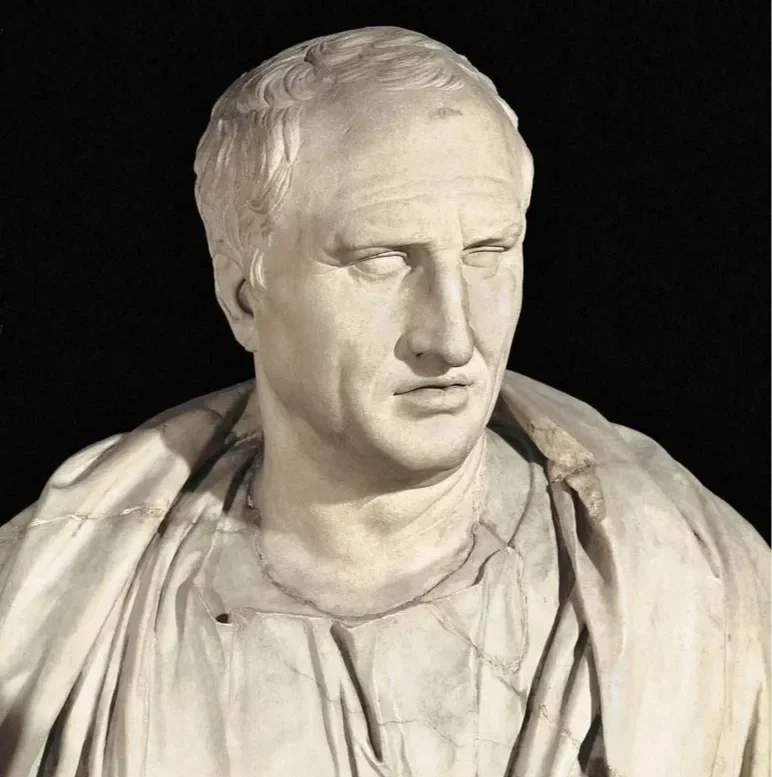
The bust of Marcus Tullius Cicero, the famed Roman orator
Unsurprisingly, the idea dates back to Classical Antiquity — to the worlds of ancient Greece and Rome, where philosophers such as Aristotle and powerful rhetoricians like Cicero and Quintilian sought efficient ways to organise their thoughts and opinions. The name itself derives from the Greek word “topoi”, meaning “places”. Hence, the term “Commonplace” — as in, a single place to record, review, and refine ideas. Their authors would organise their collections into categories, allowing them to leaf through entries relevant to a particular moment or train of thought. Justice, war, virtue, power — if a practitioner found a nugget of gold during their studies or discussion, they would store it under the relevant topic (another word descended from our aforementioned Greek ancestor) for easy reference and reexamination. There was a purpose here, one that went beyond simply serving as reference material for inspiration: they were training their minds to retrieve arguments on command — a skill that would earn Cicero, in particular, his place as one of history’s greatest orators.
Society inevitably marches forward, however. As Christianity flourished across the Mediterranean and Europe, this form of Commonplacing declined, shifting away from argumentation and towards theological reflection. Holy men would transcribe their thoughts in the margins of scripture, questioning the true nature of the divine and interpreting the words before them in a plurality of ways, hoping to glean an understanding of the kernel, the central truth, of the word of God. Augustine of Hippo, for example, is one such figure whose works, shaped by constant examination and re-examination of holy writ, have influenced the very foundations of our Western culture. Over time, as the Christian Church became increasingly institutionalised, this type of commentary was formalised, documented, and shared as authoritative texts for teaching and preaching.
Then came the Renaissance, and with it, transformation. It was a period of flourishing intellectualism, creativity, and imagination, marked by a renewed focus on individual thought and perspective — fertile ground for the revitalisation of a practice that had become rigid and formal throughout the Middle Ages. Personal Commonplacing became widely popular once more. Further still, it evolved. With the publication of “A New Method of Making Common-Place-Books” in 1685, English philosopher and physician John Locke introduced his indexing system to the world. Anyone could tell you that a notebook filled with random scribbles risks becoming cumbersome and chaotic (more on that later), but the approach Locke proposed to simplify the retrieval of relevant information not only opened a new realm of thought organisation but also foreshadowed some of the core principles behind modern information technology: hyperlinks, graphs, databases, and query languages, to name just a few.
The practise continued to shift with the times over the following centuries. Books became plentiful, and why would anyone need such meticulous note-taking when they could simply refer to texts? The known world underwent an industrial revolution, dismantling the feudal system and transforming educational models. Curricula and examinations were standardised — rote learning became the main method of instruction. Gradually, rhetoric was dethroned from its esteemed position in society and replaced by specialised skill sets. Modern science flourished, bringing with it professional and academic publications that detailed the marvels of the natural world, the human body, and the very atoms from which we are made. Yet another leap forward in the evolution of the Commonplace Book.
But as already mentioned at the top of this whistlestop tour, the progress of society is inexorable. The advent of the Digital Age — and the sheer volume of information it suddenly made available to our fingertips — created a renewed need for systems and tools for personal knowledge management. John Locke’s indexing system has been largely replaced by methodologies such as Tiago Forte's “Second Brain” and Niklas Luhmann's Zettelkasten System, both of which cast a far-reaching, complex shadow over the English philosopher’s approach. Note-taking applications such as Notion and Obsidian have revolutionised how we store, keep track of, and connect the information we collect in ways that allow us to access what we need, when we need it — as if by the power of thought itself. Even basic offerings, pre-installed on our devices and fitted with simple search functionality, offer a monumental leap in utility compared to the tools of the past.
Why, then, if such advanced tooling is available at the touch of a button, am I harping on about my precious notebook? Is it because I’m backwards-looking? A traditionalist? Do I simply wish to shallowly imitate the great figures of history who, I will gladly admit, I admire so much? Perhaps all of these are true, but none are the real reason I have avoided keeping my collection in digital form.
The truth is, there is something magical about the physical act of writing. Hidden within the act of gliding a pen across a page, transforming thoughts from their base electrical signals in the brain and sending them on their journey through the nervous system, down the arm and into the fingers, finally shaping their form in ink on paper, lies an undeniable, and in our modern world, often forgotten, beauty and elegance. It’s intimate. It’s visceral. Unlike keystrokes, physical writing helps fix its content in the writer’s mind, and instead of quickly-forgotten musings that ultimately amount to nothing more than binary strings etched somewhere on a disk, we are left with a tangible, personal artefact in the form of a real notebook. To each their own, however. It is far from my place to tell anyone how to organise their thoughts, but the physicality found here is something I can’t do without.

Portrait of English Philosopher and Physician, John Locke
Now, lest I leave you with the impression that I am an expert in this practice, I must admit that there is one aspect of it that I have been neglecting — one that is now remedied thanks to my research for this very article. It is with the greatest shame that I disclose my edition of Fragments lacked any form of categorisation system. Like a newcomer to physical exercise, my poor form has resulted not in strained muscles but in pages and pages of uncategorised quotes and ideas, nothing more than chaotic flotsam and jetsam adrift in a sea of ruled A5. Yes, my retention has greatly improved, but how am I meant to use my Commonplace Book as originally intended if I have no index with which to find the information I need? Fear not, reader, for I was fortunate enough to leave myself two clean pages at its forefront, giving me the perfect chance to adopt the categorisation system of my new benefactor, John Locke.
My millennial mind finds it awkward and cumbersome, and this experience, admittedly, contradicts my support for modern methods. There is genuinely nothing that can match the speed and efficiency of accessing data with tools like Obsidian, Notion, or even Apple Notes — but I’ll take the feel of a nice pen gliding across the blank page over convenience any day of the week.
A traditionalist? Backwards-looking? Derivative? Maybe.
A believer in the magic of the written word? No doubt about it.